
Guides & Info
Swiss Galoppers SG/X Standard & SG-L/LX
Everything you need to know
About Swiss Galoppers Hoof Boots
Important!
Do not use shoe polish or similar greasy products such as oils, creams, etc., as this reduces the shoe’s ability to fit properly.
To ensure you can enjoy your Swiss Galoppers for as long as possible, look after the fastening and ankle straps by rinsing them regularly with water. Make sure to fasten the Velcro fastenings even when not in use.
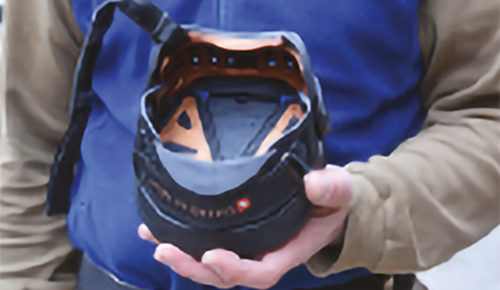
The fastening strap is designed to prevent the hoof boot from coming off should it ever come loose.
Before using the strap for the first time, attach it once using the short Velcro strip to the inner slot behind the bulb protection pad.
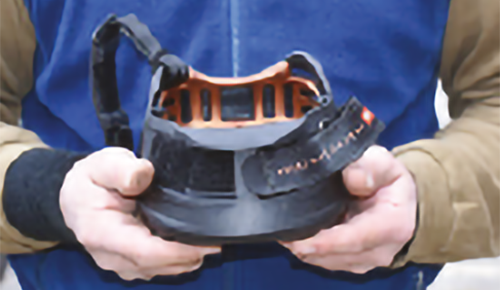
To do this, undo the fastening strap and attach the Velcro to the side of the centre bar.
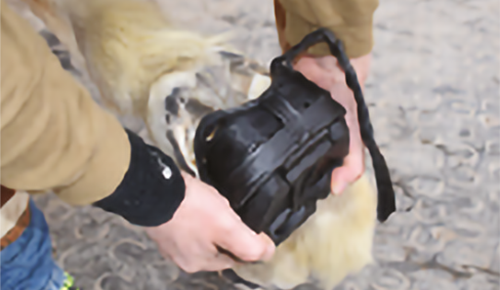
If you don’t want to use the ball pad, you can now put the hoof boot on: pull the hoof boot over the hoof, starting from the toe.
The buckle of the fastening strap should be visible on the outside.
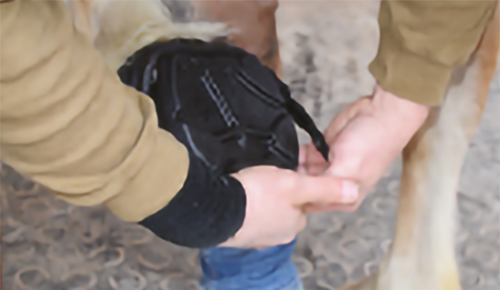
Gently tap the tip of the hoof boot to ensure that the hoof is positioned right at the front of the boot. Make sure the boot is sitting straight.
For horses with a lot of hanging hair, remove the hair from the pastern area.
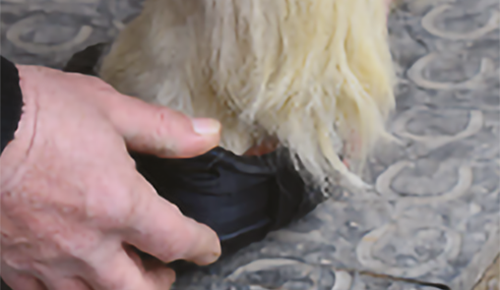
Now set the hoof down and check that the shoe fits correctly by lifting the ball socket.
The bronze-coloured mud flap sits above the heel balls.
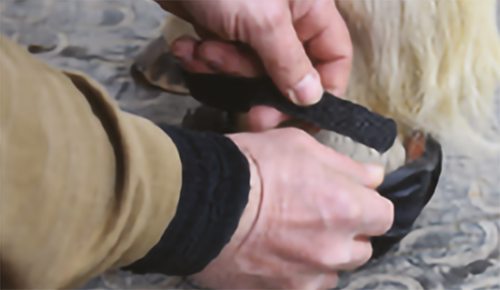
IMPORTANT: Secure the fetlock band on the outside before tightening the fastening strap. To do this, push the hoof cup back slightly.
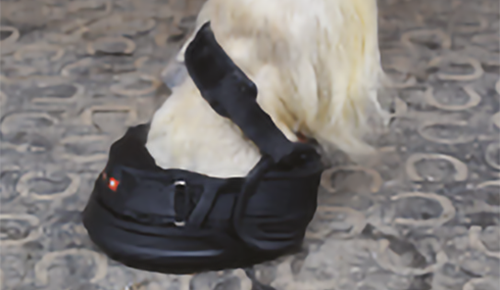
Now pull the fastening strap tight. Fasten the shoe at the front so that the fastening strap lies flat all the way round and the Velcro fastening can grip as firmly as possible.
In the final position, the metal buckle sits directly in front of the side strap guide at the edge.
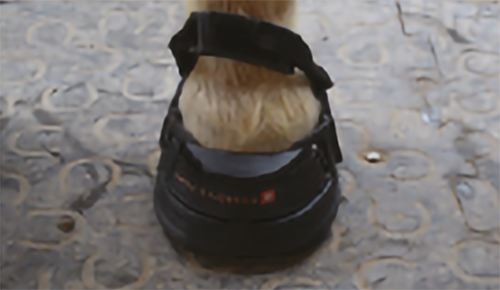
Now fasten the restraint strap. The strap should be loose, with a gap of at least two fingers’ width between it and the fur.
Good to know:
Alles zum SG-L/LX-Model
IMPORTANT NOTES
The L/LX-model (‘L’ stands for ‘long’) is used when the standard shoe does not provide optimal coverage of the length and/or height of the hoof – that is, the hoof ball.
In this case, the ball socket would not be positioned vertically and/or would be too deep.
Ideal angle
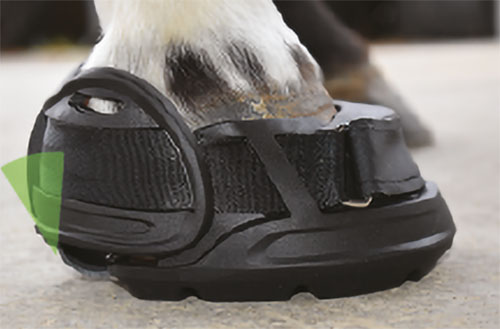
Angle too flat
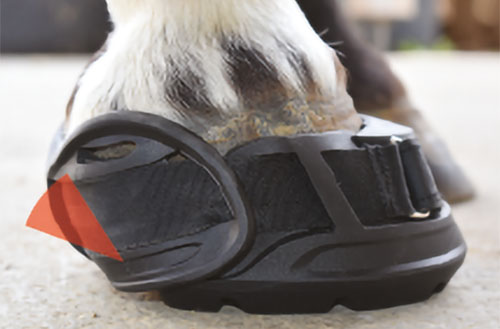
If the pre-assembled plastic connector causes the bale tray to be positioned too high, you can replace it with the shorter version supplied (see ‘Replacing the connector’).
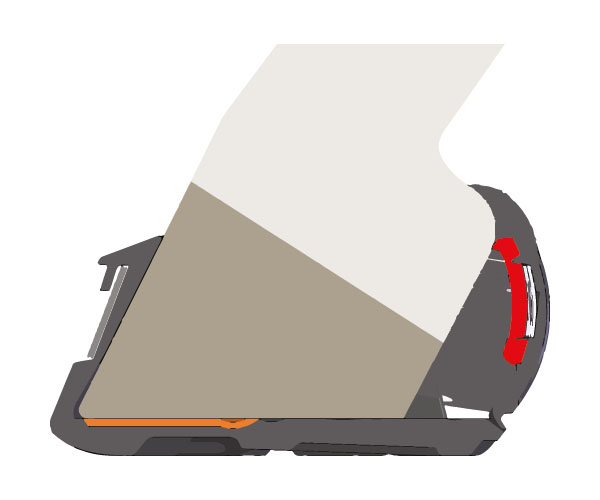
Ideal height of the ball socket
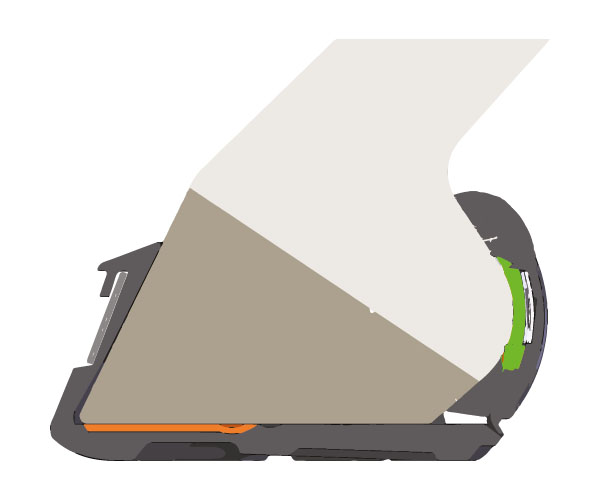
Ball socket is to high
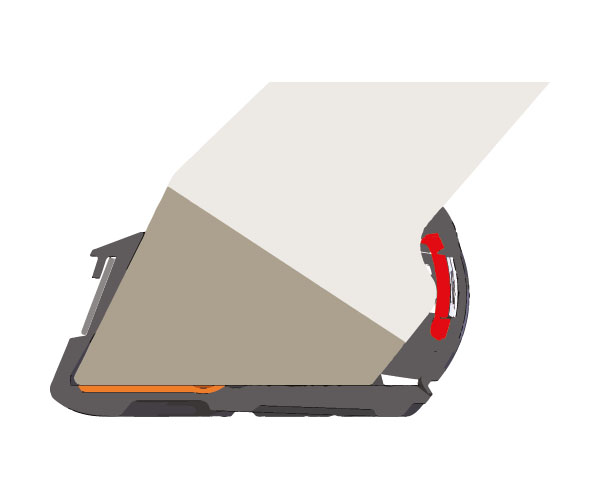
Ball socket is to low
Replacing the Connector
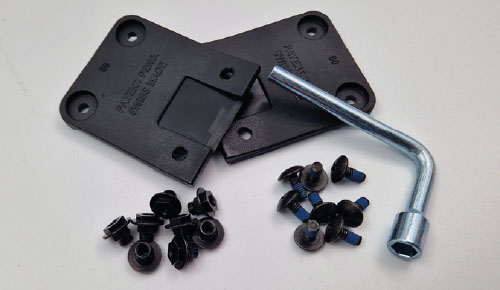
To replace the connector, please use the tool supplied, the new safety screws with intact threadlocker, and the washers.
You still need a suitable cross-slotted screwdriver.
The replacement bit is 10 mm shorter.
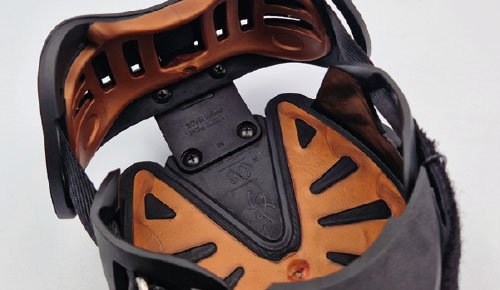
Loosen the top and bottom screws and remove the old connector.
Insert the new bit, fit the shims and screw everything back into place.
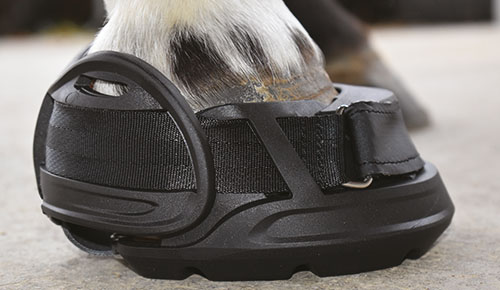
The SG-L/LX has now been shortened and should fit perfectly.
Check the screws regularly and tighten them if necessary.
Good to know:
Pastern and Heal Protecation in Action
Greater comfort and safety for your horse
Pastern protection: The sensitive pasterns are optimally protected by the fessel protection (‘gaiter’). This helps prevent potential chafing around the frog and pastern. The fessel protection is not included in the hoof boot kit. It is available from the SG Shop.
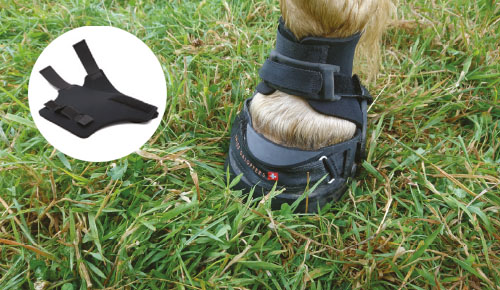
Heel protection: You can provide additional protection for your horse’s soft fossets using the soft neoprene fosset pads included in the kit. For instructions on how to fit the fosset pads, please also refer to ‘Fitting fetlock or fosset protection’.
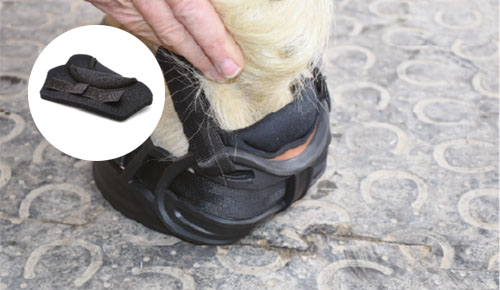
Attaching the pastern or heel protection
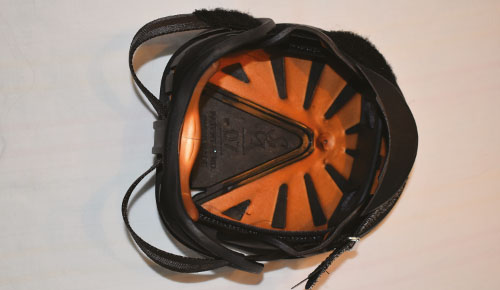
Opening the fastening strap: Loosen it enough so that two loops can be pulled out next to the rear centre bar.
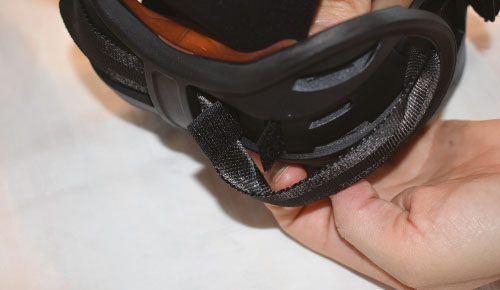
Take the hoof or fetlock protector. Hold it so that the Velcro tabs can be threaded through the slits in the bulb pad.
Pull the Velcro tabs through the slits and fasten them at the back.
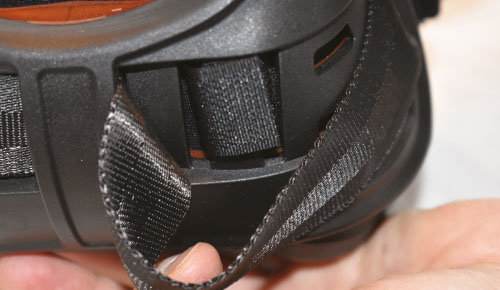
The fastened Velcro flaps should lie flat against the bar. Once you have threaded both sides through and fastened them, pull the fastening strap back to its original position.
The pastern or heel guard is now securely fitted to the bale section.
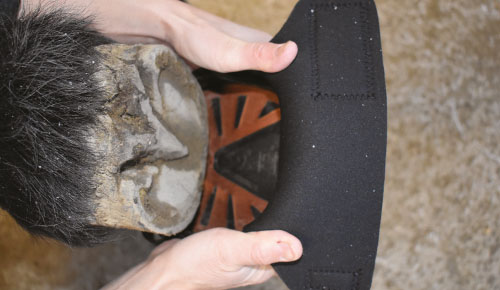
Putting on the hoof boot with fetlock protection: To put on your Swiss Galoppers with fetlock protection, fold the fetlock protection back slightly to allow access.
For horses with a lot of hanging hair, arrange the hair so that it lies flat. Then fasten the top Velcro strip and press it down firmly.
When using the heel guard, please ensure that any loose hair are kept outside the bale socket.
First steps
with Swiss Galoppers Hoof Boots